Friday, August 5, 2011

Truman Capote's Green Roof

In early June, Alive Structures collaborated with the sustainable Hamptons-based architecture firm Modern Green Home to install a green roof in Southampton. We used ultra light-weight green roof soil by The Gaia Institute and pre-grown sedum mats intermixed with native dune grass and prickly pear on this 500 square foot green roof in Sagaponack.

Technicolor sedum mat.

The house's current owner told us that while clearing the invasive honeysuckle and japanese knotweed plants that had taken hold of the property he had unearthed a number of aged Veuve Clicquot bottles nestled in the undergrowth. We can only wonder how they got there, but to fuel your imagination, the beach house originally belonged to Truman Capote. It was an honor to do a green roof on the house that Mr. Capote occupied from 1961, when he commissioned it, until his death in 1984. We just got these photos of the roof in bloom.


In a 1976 profile of the house, Architectural Digest described the surrounding landscape as "a stretch of rolling potato fields and lush farmlands married to the nearby Atlantic Ocean." In the same article, Capote described it as “Kansas with a sea breeze.”

Capote at home. Photo via Architectural Digest, kind of.

Both the dune grass and the prickly pear (seen peeking out from the blooming sedum in the photo at the top) we planted on the roof are native to the area. We used dune grass as a nod to both the location and the spirit of the beach house. Many people find it hard to believe that eastern prickly pear (Opuntia humifusa), a cactus, is native to the Northeast, but in fact it grows as far north as southern Ontario.

Some photos from the installation, below.
Marni and Orlando with a prickly pear.


Friday, July 29, 2011

July S.W.I.M. Meeting


Monday morning was cool, overcast and a little windy. After the sweltering soup we waded through last weekend, this was beautiful weather. I was thrilled to be out in it, and excited to attend the Storm Water Infrastructure Matters Coalition meeting. S.W.I.M. is a group of New Yorkers dedicated to improving water quality in the city's rivers and estuaries through equitable distribution of green infrastructure.

The chickens and Annie Novak, Eagle Street's head farmer. Via The Atlantic.

The July meeting was held at Eagle Street Rooftop Farm in Greenpoint, Brooklyn. We sat on a small platform in the midst of a lovingly farmed green roof. Behind our group, chickens scratched in their coop and troops of city kids toured the farm. In front of us, midtown towered gray and reflective. The meeting opened with a presentation by Tyler Caruso and Erik Facteau about their research project, Seeing Green: The Value of Urban Farms, recently funded on Kickstarter. If they hadn't already raised the amount they were looking for I'd tell you to go donate; the project hopes to determine whether rooftop farms are equivalently efficient at capturing stormwater as traditional green roofs. This research could be used to make New York's green roof tax credit applicable for rooftop agriculture, which it currently isn't.

A still from the Seeing Green Kickstarter video showing Tyler and Erik on the roof at Brooklyn Grange farm.

The rest of the meeting centered around the previous week's combined sewer overflows, discussed in our last post. S.W.I.M.'s members were not happy.
The July meeting, from the S.W.I.M. blog.

They had reason. Notification of the CSOs was insufficient, and many of the boaters were either out on the water themselves or had groups of people (including high schoolers) in the water while sewage was being released nearby. The NYC DEP sent some representatives, though if they were trying to do damage control they weren't very successful. The unlucky, besuited bureaucrat who took questions was evasive and non-commital. The scene could easily be caricatured: clean-cut government employee yelled at by environmentalists over inadequate response to emergency. But the passion exhibited by the members of S.W.I.M. wasn't amusing, it was awesome. I left thinking that New York is lucky to have such people looking out for our waters and our health.

For in-depth notes on the points covered in the meeting, head over to the S.W.I.M. blog.

Monday, July 25, 2011

Sewage in New York's Rivers

A sewer outfall a few blocks north of Christopher Street in Manhattan on the morning of July 22nd. | Photo credit SeaAndSkyNY

If you live in New York City, you probably know by now that a pump engine fire shut down the North River Wastewater Treatment Plant at 125th St. last Wednesday night. Over the following two days, raw sewage was diverted from the plant into the Harlem and Hudson rivers, to the tune of about 200 million gallons.

Smoke from the fire fills Riverbank Park nearby. | Photo credit @phlpp7r

It was particularly unfortunate that the sewage outfalls contaminated New York's waterways the same weekend that temperatures in the city reached 104, a record high. The city issued an advisory warning against swimming at three beaches in Staten Island and one in Brooklyn, but it wasn't clear how effectively the warnings reached New Yorkers. The New York Times reported visitors with small children at two of the beaches who were unaware that the water was unsafe, and people were seen fishing in Staten Island and the Harlem river. Both activities carry serious health risks, and it may be that we need better systems for informing the public of CSOs (combined sewer overflows). As someone pointed out at this morning at a S.W.I.M. Coalition meeting, subsistence fishermen in East Harlem probably don't read press releases.
A floating barrier near the treatment plant. | Photo credit NYTimes

While this event was unusual in its scale and origin, the sad truth is that CSO events are not uncommon. They happen at various outfalls around the city almost every time it rains.

Wednesday, July 13, 2011

Manhattan's Newest River

We are so excited that the New York Times featured our rain garden at Teachers College in the Home section in the Thursday, June 30 issue. If you missed it, you can still access the article online. Enjoy the photos from the installation!


Monday, April 18, 2011

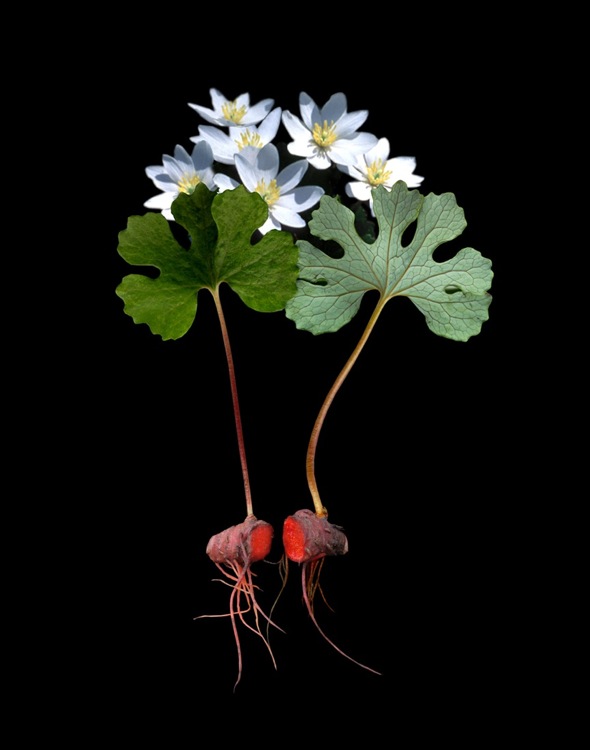
Bloodroot vs. Godzilla


Something so delicate and beautiful recently enraged me. Bloodroot, Sanguinaria canadensis, is poking it's head out of the ground, at first shy and ruffled up, and then slowly unfurling it's unique shaped leaves and exposing a small white bud that transforms itself into a stunning flower. These pix are from my garden:


As beautiful as it is, you might not notice it under the tall and bright daffodils and tulips that are planted in every single garden that exists. Sadly, you won't see it in many gardens nor will you see it much in nature, although it is native to the Northeast American woods.


Seeing the little Bloodroot reminds me of how precious woodland flowers are and my commitment to native plants redoubles. Why is this plant endangered? Why does no one plant this in their garden? How come no one even knows what this plant is? This is when I start getting upset.

I was in Vermont with my mom a few springs ago, and I remember we saw a couple of white trilliums and excitedly started looking for more when I saw a mass of Japanese Barberry, Berbis thunbergii. Once my eyes took in the shape and look of the barberry I realized that it was everywhere in the woods. They had formed thickets. No wonder I wasn't finding many spring ephemerals, many of them are shaded out by this incredibly invasive shrub! Japanese Barberry is one of the first shrubs to leaf out in spring, so it prevents the badly needed sunlight from reaching the forest floor where our little woodland gems are waiting to sprout. Barberry is as ubiquitous as boxwoods in most landscaped gardens so few nurseries have ventured to stop selling it yet it should really be illegal to sell or to plant it (as it is in Canada).

From Home and Garden Ideas:
Although charming, with its small, red berries, Japanese barberry is one of the most invasive plant species in the north east part of the United Space, especially in areas like New Jersey and Pennsylvania.....This plant is considered invasive because it quickly takes over forests and wipes out the native plants that make up the understory of the forest. This inevitably leads to a disruption in the availability of food for animals that depended on the species of plants the barberry displaced. Besides wiping out food supplies, the barberry plant also alters nitrogen levels, pH levels, and destroys certain biological activities that occurs in the soil. Because they can grow in less than ideal conditions and are drought-tolerant, it gives them an edge compared to native plants.

According to the Connecticut Botanical Society: Japanese barberry is an invasive plant, and probably one of the most destructive invasive plants in Connecticut. It can form thick stands that exclude nearly all native plants. The seeds are spread over long distances by birds.

Sad but true. See these forests, forever altered:


and there's more.....From Scientific American:Link
...And here’s the kicker for those of you who’d still consider planting it in your backyard: The prevalence of ticks infected with the Lyme disease–causing spirochete (Borrelia burgdorferi) is greater in areas with Japanese barberry than areas without....

If you're interested in reading more about the connection between Japanese Barberry and Lyme's Disease click here: Barberry, Bambi, and Bugs


If nothing else, realize that not all plants that are green are necessarily good. Invasive species don't just shade out cute flowers, they effect the whole food chain and our health. Please don't buy one this season and tell your nursery you would appreciate it if they stopped selling it!


Monday, March 14, 2011

Spring in Paris in Philadelphia in Winter


The tradition of The Philadelphia Flower Show begun in 1829 by The Pennsylvania Horticultural Society. The Show was held in a small building called Masonic Hall where Twenty-five people showed off their horticultural treasures to each other.

The show has moved locations a few times since then and is currently in the Pennsylvania Convention Center, a 33 acre space, with the exhibit taking up 10 of those. It's the largest indoor Flower Show in the world, entertaining crowds over 250,000 people annually.

They have themes each year and this year the theme was 'Paris in Spring'. This included many overweight Americans wearing berets, hot dog stands being called Boulangerie, lots of misspelling, and a replica of the lower third of the Eiffle Tower with swaths of tulips and roses on each side. Paris never looked so good!


How to describe it: shock and awe, surreal, extravagant, artificial, beautiful, and completely unsustainable. The flowers in the tulip display had to be changed out three times during the ten days the exhibit was open. All the bulbs, perennials, and huge trees, are forced into bloom in giant greenhouses,
whole houses and small forests temporarily constructed, and all this big production is made so we can just feast our eyes on the fluorescent beauty of nature months in advance. Green walls, packed tight with tropical ferns and orchids, were already starting to fade on this last weekend, and I can only imagine the plants fate after the show comes down.


The best part of the show are the rare specimens entered into the contests. Here you can see the real horticultural skill of obsessed people. They have nurtured some of these plants into the fantastic form they're now in for perhaps the last twenty years. I mean how often do you have to mist a fern to get it to thrive like this?!


This is a creation of both nature and man and this is the real stunning part of the show.


Tuesday, February 8, 2011

Tropical Worlds in Winter


In a time when most landscapers have no work, we're luckily keeping busy. We just installed a temporary green wall for Lacoste, the clothing company. They're having a big soirée Feb.8 (with lots of good looking French people! ) to celebrate the launch of their new line. The Quebec company La Prod was really cool and organized an awesome design for the shop. We were happy to be part of the whole production. Here are some pix of the installation:


Also, another indoor installation of ours was just mentioned with a picture in The Architect's Newspaper in 01/19/2011. Check it out: